Hot Tub Electrical Requirements Guide for Michigan
A new hot tub can be in your backyard and filled with water before the real installation bottleneck shows up: electrical work. This hot tub electrical requirements guide gives Michigan homeowners the straight answer on what usually needs to happen before delivery day. Get the power plan right early, and your spa setup stays on schedule instead of becoming an expensive last-minute scramble.
Most premium, full-size hot tubs need a dedicated 240-volt circuit installed by a qualified, licensed electrician. That is not a corner-cutting category. Water, winter weather, high-amperage equipment, local permits, and electrical code all meet at the same point. Proper planning protects your family, protects the spa, and makes sure you can enjoy the hydrotherapy you paid for from day one.
What Electrical Service Does a Hot Tub Need?
The exact electrical requirement depends on the specific hot tub model, its equipment package, and the manufacturer specifications. Many full-size hot tubs run on a 240-volt, 50-amp dedicated circuit. Some models may require a different amperage, while certain smaller plug-and-play spas can operate on a standard 120-volt outlet.
For most homeowners shopping for a serious four-season spa, 240 volts is the better setup. It allows the heater and pumps to perform together more effectively, which matters when Michigan temperatures drop. A 120-volt model can be convenient, but it typically has more operating limitations. You may not get the same heating and jet performance at the same time, especially during cold weather.
The key word is dedicated. Your hot tub circuit should serve the spa only. It should not share power with garage outlets, landscape lighting, a freezer, or anything else. A premium spa has real electrical demand, and a dedicated circuit is the proper way to supply it.
Read the Spa’s Specification Sheet First
Never guess at electrical requirements based on a neighbor's hot tub or an online forum. The control pack, heater size, number of pumps, circulation system, and optional features can all affect the required circuit.
Before scheduling electrical work, provide your electrician with the exact make and model information. They should work from the manufacturer documentation, not assumptions. That simple step prevents one of the most frustrating installation mistakes: paying for a circuit that does not match the spa that arrives.
GFCI Protection Is Not Optional
A hot tub must have ground-fault circuit interrupter protection, commonly called GFCI protection. This equipment is designed to shut off power quickly if it detects an electrical fault, which is especially critical around water.
In a typical hardwired installation, the electrician installs a GFCI breaker in a spa disconnect box. The disconnect gives you a local shutoff point near the hot tub while keeping the electrical protection where it belongs. Requirements can vary based on local code and the installation layout, so your electrician should verify the details with the authority having jurisdiction in your municipality.
Do not confuse a regular breaker with GFCI protection. They do different jobs. A standard breaker protects wiring from overloads and short circuits. A GFCI is designed to reduce shock hazards. Your spa installation needs the right protection, not the cheapest-looking panel solution.
Where Should the Disconnect Box Go?
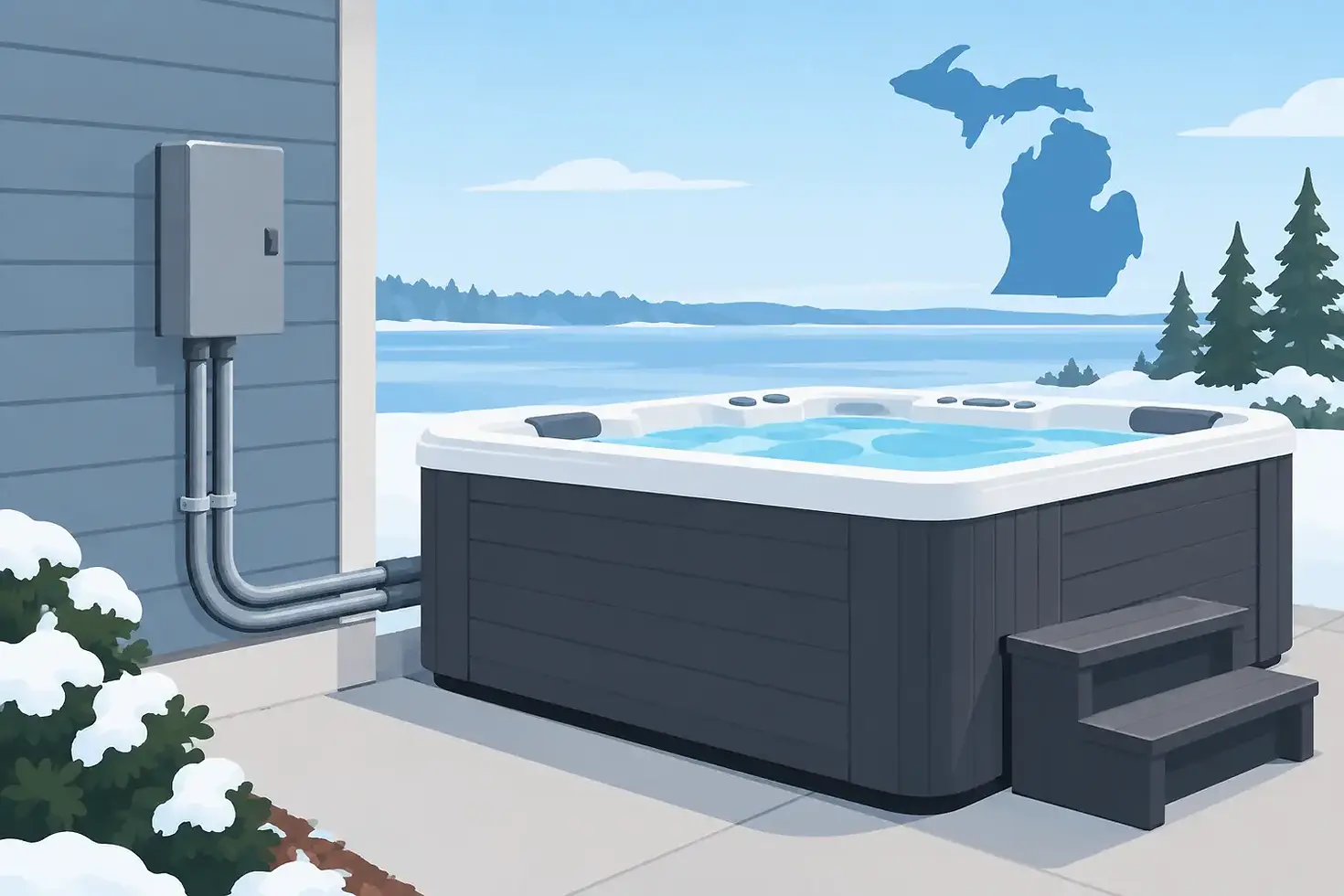
The disconnect must be accessible and visible from the spa, but it cannot be placed so close that someone in the water can reach it. Under commonly used National Electrical Code guidelines, the disconnect is generally located at least 5 feet away and within sight of the hot tub. Local enforcement can add details, so have the electrician confirm the final location before mounting anything.
This is where backyard planning matters. If the spa is going near a deck, patio, fence line, or exterior wall, leave room for safe electrical access. Do not bury the disconnect behind the tub or squeeze it into a spot that becomes impossible to service later.
A clean installation should be practical, not just technically passable. You want the spa accessible for service, the disconnect easy to reach, and the wiring route protected from traffic, snow removal, lawn equipment, and future landscaping projects.
Plan the Electrical Route Before Delivery Day
The best time to think about conduit, trenching, and panel capacity is before the hot tub is sitting in the backyard. Once the spa is in place, access becomes tighter and costs can rise quickly.
Your electrician will need to assess the route from the main electrical panel to the spa disconnect. A short run along an unfinished basement wall is very different from a long underground run across a finished yard. Distance matters because longer runs can require larger wire to manage voltage drop properly.
If the circuit will be buried, the electrician will determine the required trench depth, conduit type, wire rating, and protection based on code and site conditions. Homeowners should also call for utility locating before digging. That is basic planning, but it prevents a simple spa project from becoming a major repair bill.
For a deck installation, electrical planning should happen alongside the structural plan. The deck must support the filled weight of the hot tub, and the wiring needs a safe route that remains accessible. Do not let someone build a beautiful deck around a spa with no practical way to service the equipment or electrical components.
Can Your Main Electrical Panel Handle a Hot Tub?
A 200-amp service is common in many homes and often provides enough capacity for a hot tub, but the number on the main breaker is not the entire story. A house may already have electric heat, air conditioning, an EV charger, a finished basement, a workshop, or other major loads competing for capacity.
A licensed electrician should perform a load calculation to determine whether your existing panel can safely support the additional circuit. In some cases, the answer is simple: there is room, capacity, and a clear path to the backyard. In others, the homeowner may need a subpanel, a panel upgrade, or a different installation approach.
That is not bad news. It is useful information before you commit to a location and delivery schedule. The worst option is installing a spa circuit without understanding what the rest of the home is already demanding from the electrical service.
Michigan Winter Makes Proper Wiring More Valuable
A hot tub is supposed to be an all-season investment. In Michigan, that means the electrical setup needs to support reliable operation when the temperature falls well below freezing.
A properly installed 240-volt spa can maintain water temperature more effectively while still running pumps and jets as designed. Combine that with strong insulation, a quality cover, and a winter-ready spa build, and you get the performance homeowners expect from a premium hot tub.
Trying to save money by undersizing the electrical setup can create the wrong kind of ownership experience. You may save a little at installation, then spend years dealing with reduced performance, slow recovery, or limitations on how you use the spa. The right electrical work is part of buying the right hot tub, not an optional extra.
Common Electrical Mistakes That Delay Installation
The most avoidable mistake is waiting until after the spa is delivered to call an electrician. A good electrician may be booked out, permits may take time, and weather can complicate trenching or exterior work.
Other common mistakes include assuming any outdoor outlet will work, using an extension cord, selecting a location without a wiring plan, and overlooking panel capacity. Extension cords are not an acceptable solution for a hot tub. They can overheat, create a shock hazard, and void manufacturer guidance.
Homeowners also sometimes choose a spa location based only on the view from the house. That matters, but it is only one factor. Think about delivery access, the foundation or pad, drainage, steps, cover clearance, electrical routing, service access, and how you will use the spa in January. A smart location performs better all year.
Your Hot Tub Electrical Requirements Checklist
Before your delivery date is locked in, confirm the spa model's voltage and amp requirement, arrange for a licensed electrician, and verify whether permits or inspections apply in your community. Confirm that the circuit will be dedicated and GFCI-protected, that the disconnect location is code-compliant, and that your panel has adequate capacity.
Also make sure the electrical work is completed according to the delivery and startup timeline. In many cases, the spa can be set in place before final electrical connection, but you do not want to fill it until the equipment can be commissioned correctly. Follow the manufacturer instructions and your electrician's direction.
Spa Wholesale Outlet works with Michigan buyers who want premium Dominion Spas without traditional retail markups, and electrical planning is part of making the purchase go smoothly. Bring your proposed installation location, photos of the route from the panel, and any questions about your home's setup to the conversation early.
A hot tub should feel like the best part of your day, not another unfinished home project. Get the electrical plan handled by a qualified professional before delivery, and your first cold Michigan evening in the water can be exactly what you had in mind.
Comments